
//Designing a Procedural Roguelike in Unreal Engine 5
November 3, 2026
I’ve spent the last three weeks building a roguelike shooter in Unreal Engine 5, on top of Epic’s Lyra Starter Game. Here’s where it’s at: generated towns, an extraction loop, a pile of guns and monsters, and a desert full of worms that eventually get too big to run from.
It’s third person, every level is generated, and no two runs are the same. The newest piece is a vertical slice set out in the desert, with a jetpack, a worm about the size of a skyscraper and a quest that doesn’t use a single word. This post walks through the whole thing.
The short version: Unreal Engine 5.8 and Lyra, with all the gameplay in C++ across two plugins. Eleven generated tiers, close to thirty enemy types, 15 guns, 12 skills, 12 relics, and 82 automated tests, one of which plays the whole vertical slice by itself.
How a run works
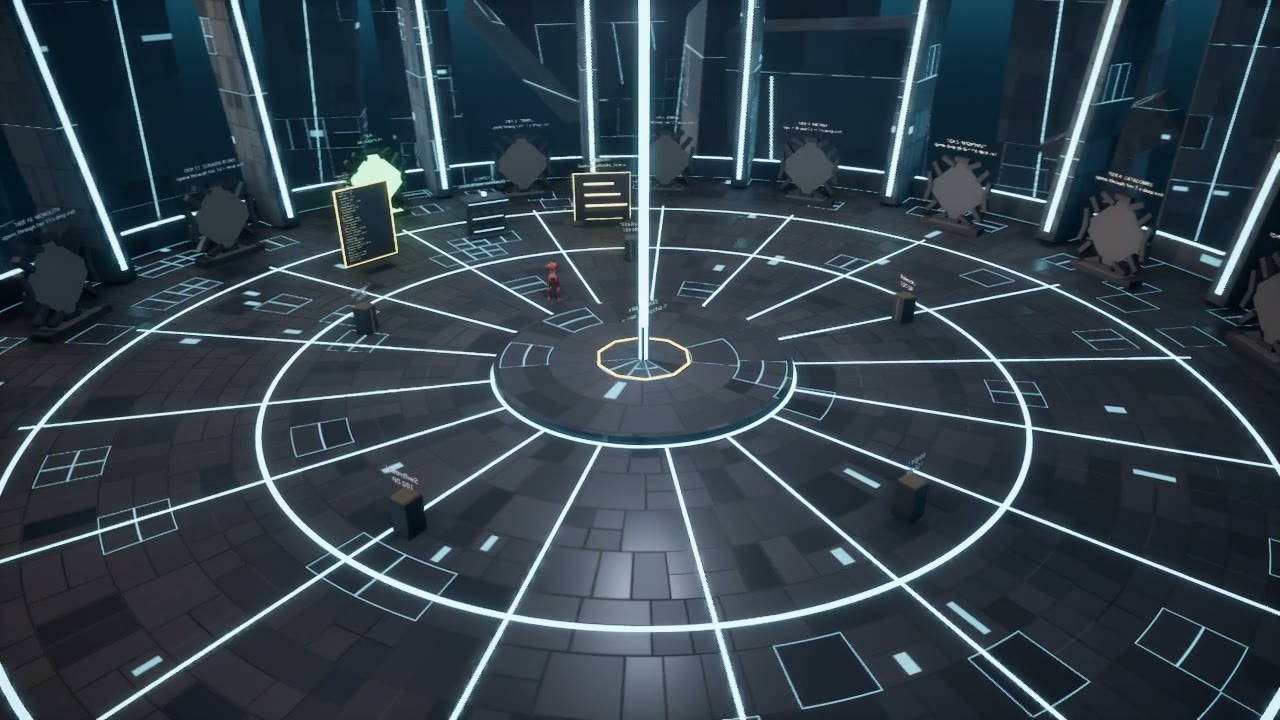
You start in the sanctuary, a round platform floating in the void. There’s a portal for each tier, altars for permanent upgrades, an armory, a supply station and an achievements board. Pick a portal and you get dropped into an expedition, which is a level built fresh for that trip.
Enemies don’t spawn in waves. They sit in formations guarding parts of the map, so you get to decide which fights to take. Everything you kill or dig up gives you datapoints, but you only keep them if you reach an exit. Die on the way and they’re gone. Each level also hides three sigils. Find all three and the deep exit opens up, which unlocks the next tier and sends an escape horde after you on the way out. The next level generates behind a loading screen while you travel.
Every level is new, so you need some way of finding the exit. Press G (or up on the d-pad) and a breadcrumb trail lights up on the floor, a glowing line with chevrons that follows the navmesh to the nearest open exit. It gets relaid as you move, so it keeps up if you wander off. When nothing’s open yet it points to the closest exit anyway, sigils you’ve already spotted count as places to go, and down in a cellar it takes you back to the door up.
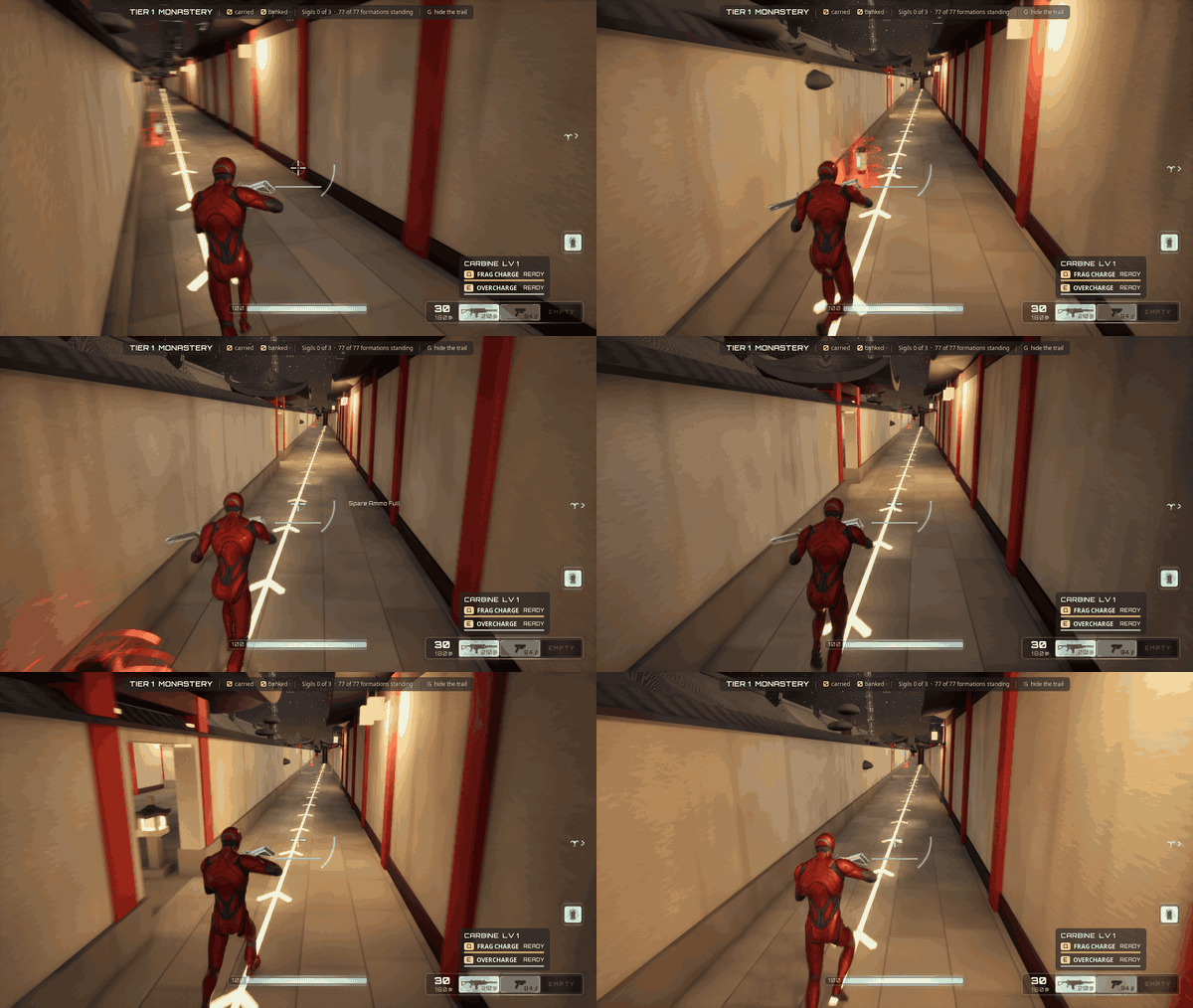
The HUD is Lyra’s with my own pieces slotted into it. Along the top there’s a strip with the tier, what you’re carrying and what’s banked, sigils found, how many formations are still standing, and the trail key. There’s a shield gauge by the crosshair, and next to the ammo a panel with the gun’s level and your two skills with their keys and cooldowns. The glyph on the right edge belongs to the wordless quest I’ll get to further down. It points at the next step whenever that’s off screen.

The levels
This whole project actually started as a level blockout tool. I wrote a 3D Wave Function Collapse generator as an Unreal plugin. It fits rooms, corridors, ramps and roofs together one storey at a time, and the game grew on top of it. Each of the eleven tiers is a preset for that generator, going from catacombs and cathedrals all the way to a favela and a hive.
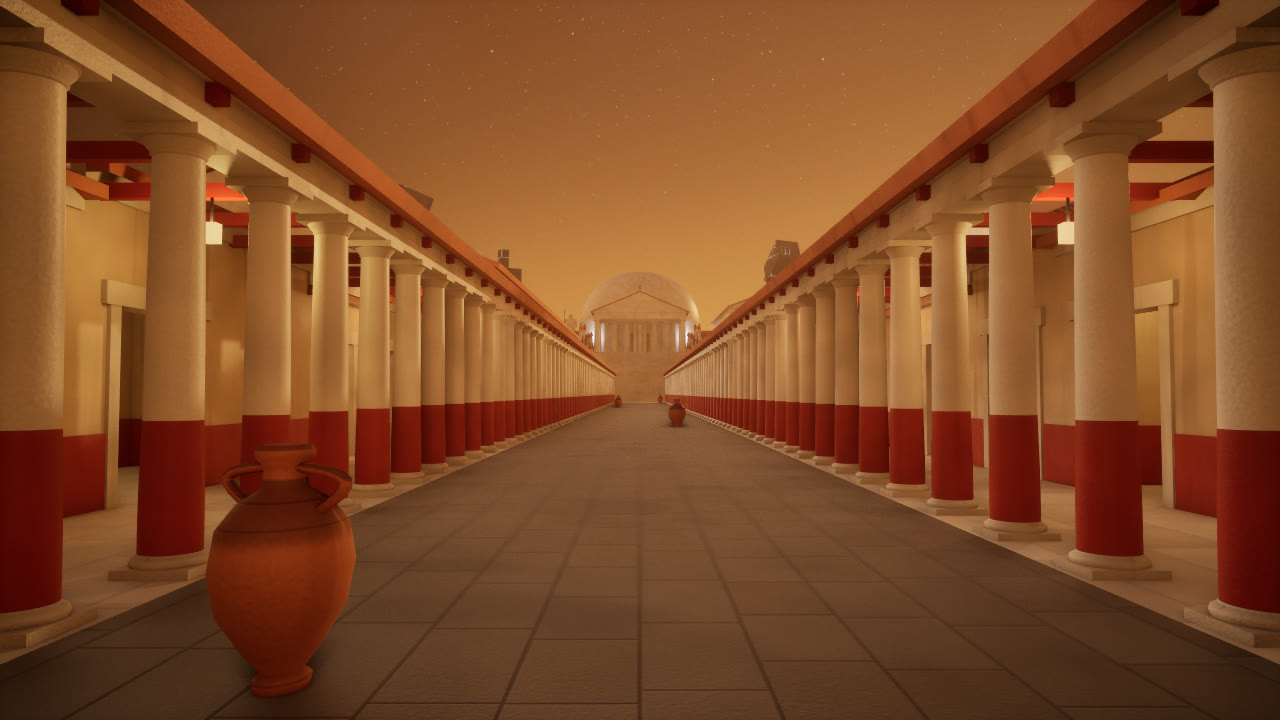
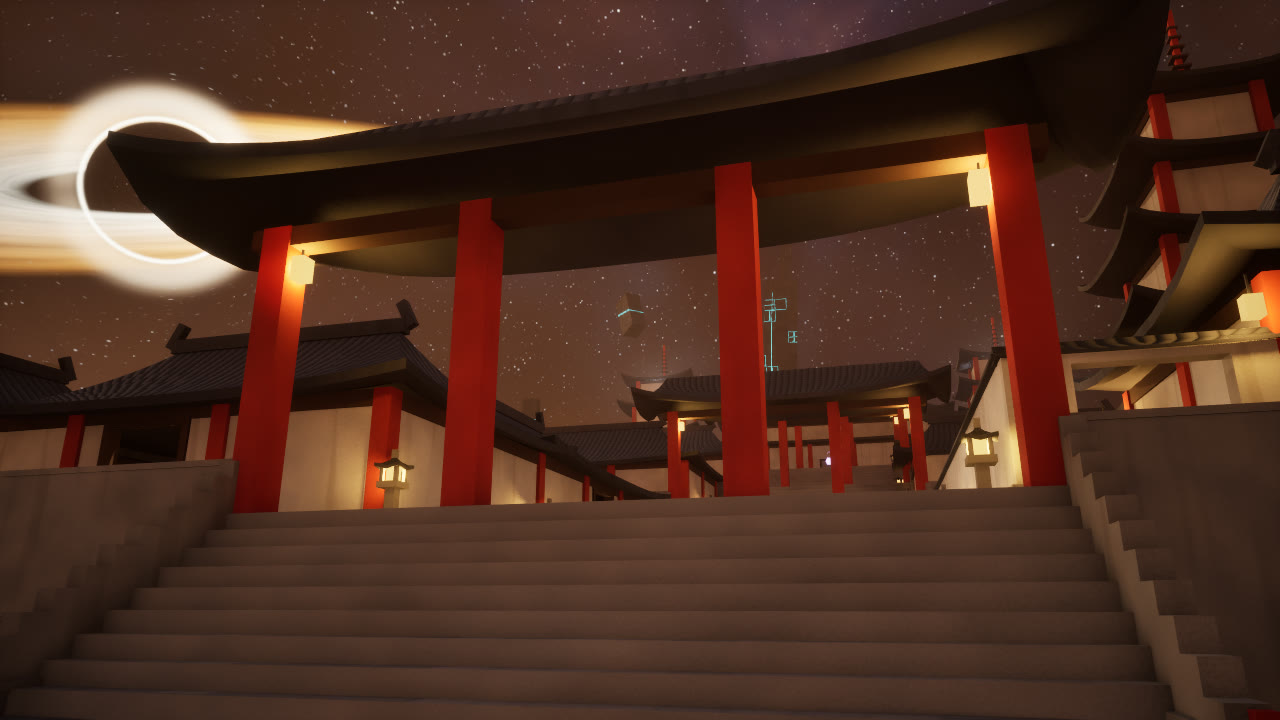
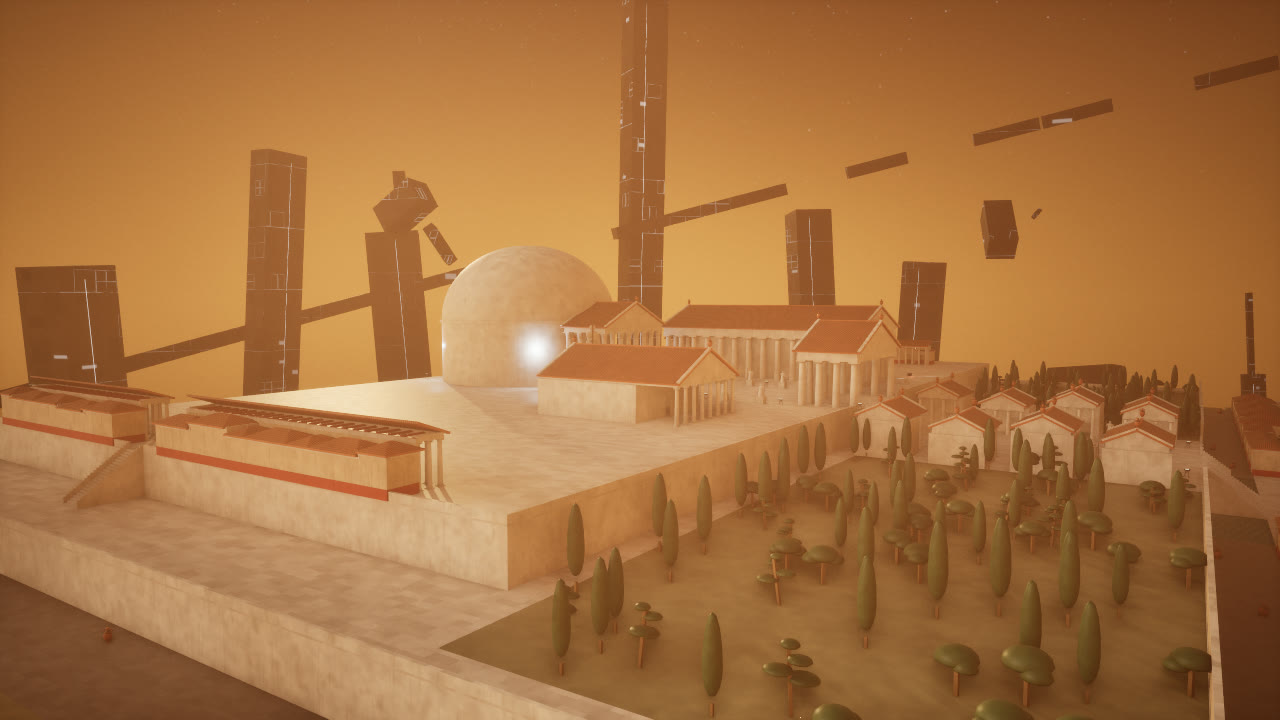
The first two tiers got extra attention. For tier 1 I wanted a temple town that looks like somebody planned it, so a site planner lays it out first: terraces around a keep, a moat, canals you can wade through, walled temple compounds, pagodas and gardens. Tier 2 is a classical acropolis with colonnaded streets, a forum, a big temple and a domed rotunda, built from a procedural kit of columns and statues. The blocks of houses inside both get filled in by Wave Function Collapse again, and the layout shifts with the seed, so you won’t see the same town twice.
The other nine tiers are the generator running one of its presets. Here are six of them from above. (The catacombs are underground and the hive has a lid on it, so from up there you’d just see sand and a purple shell.)
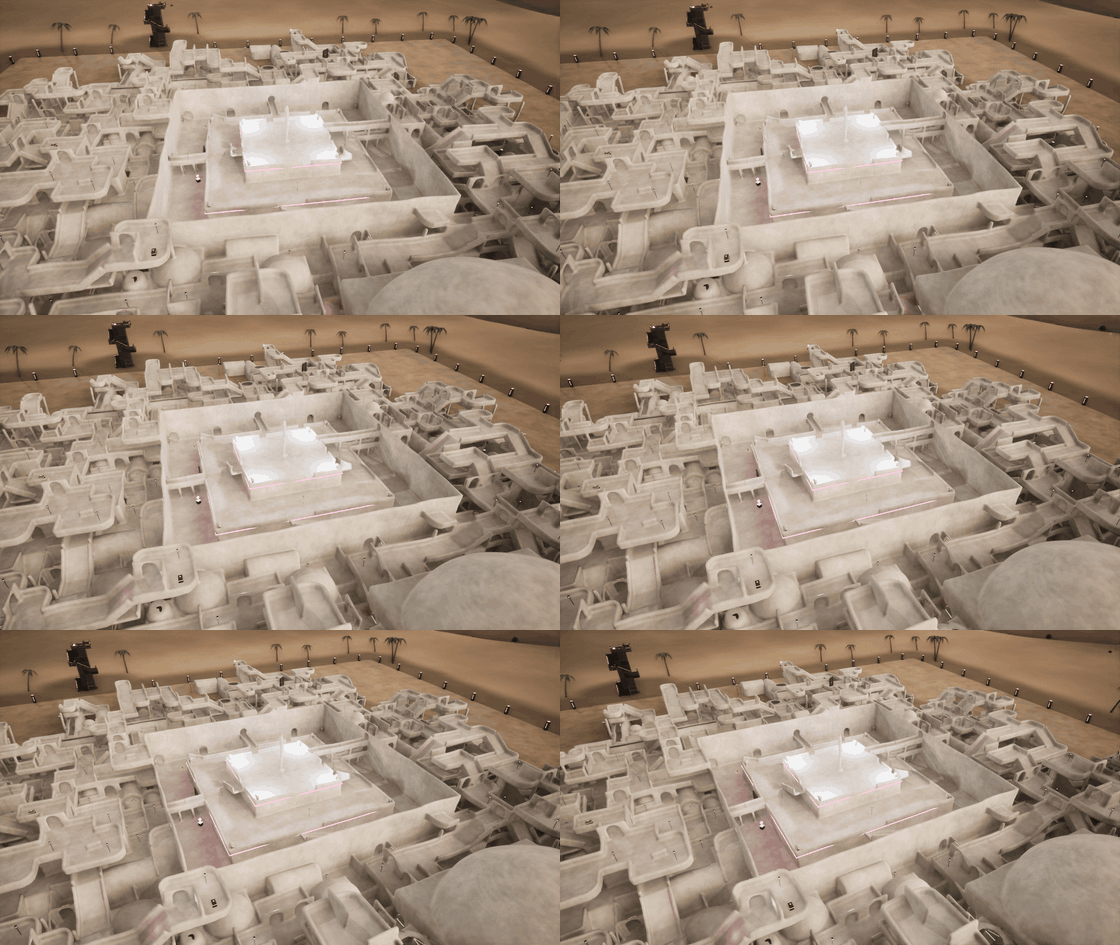
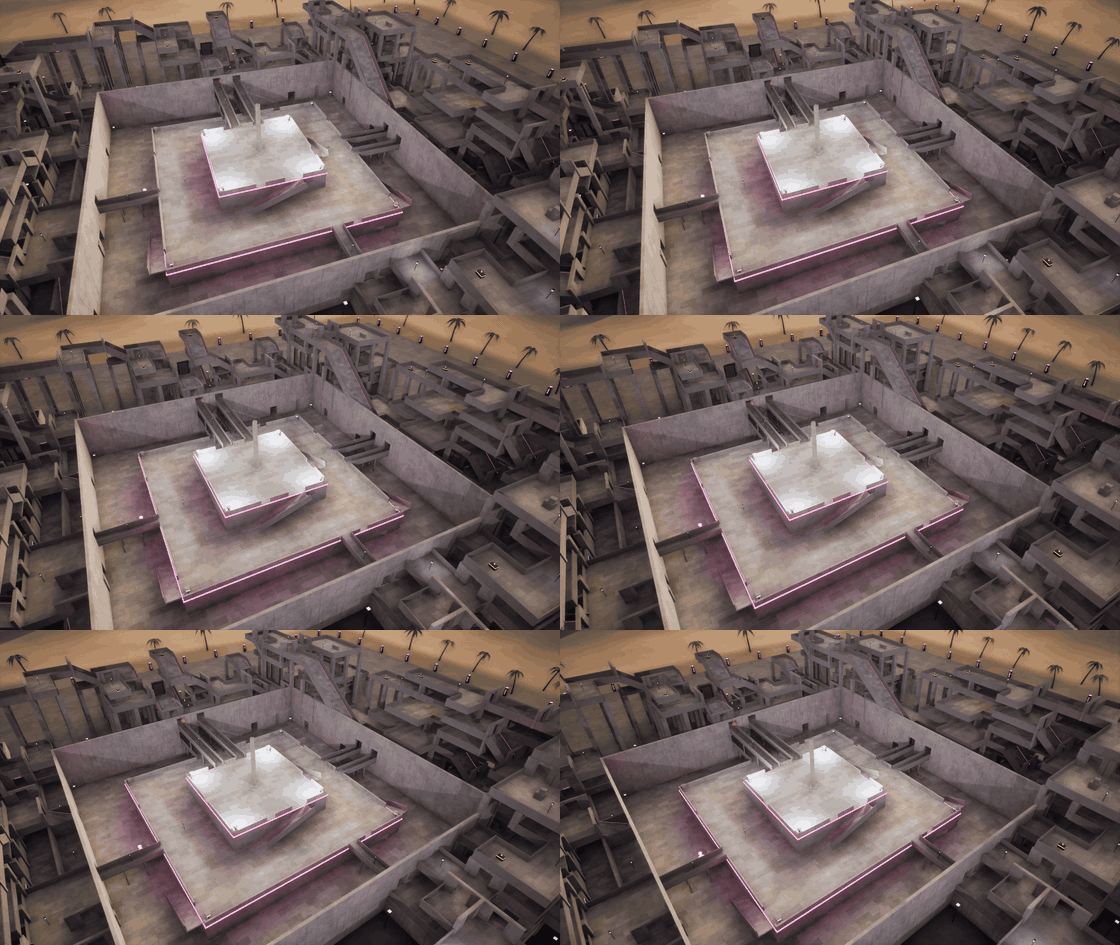
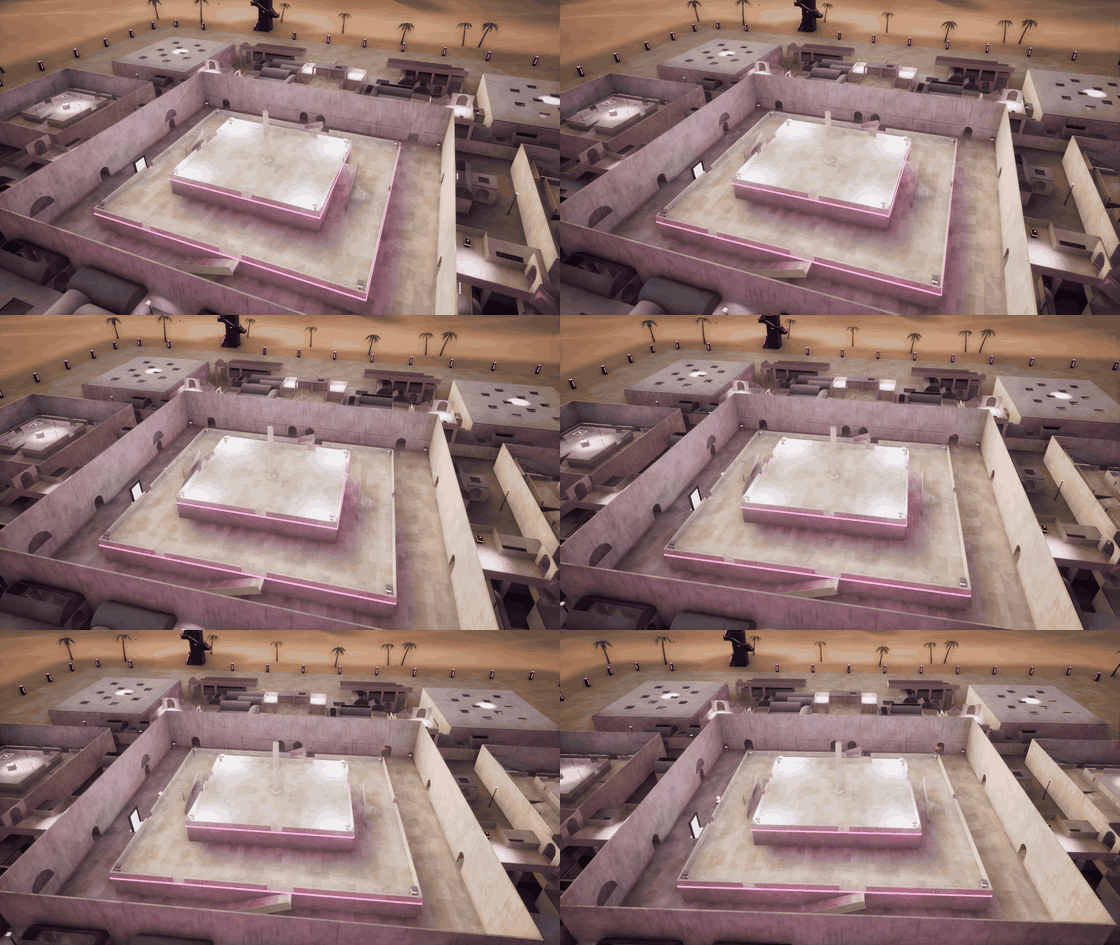
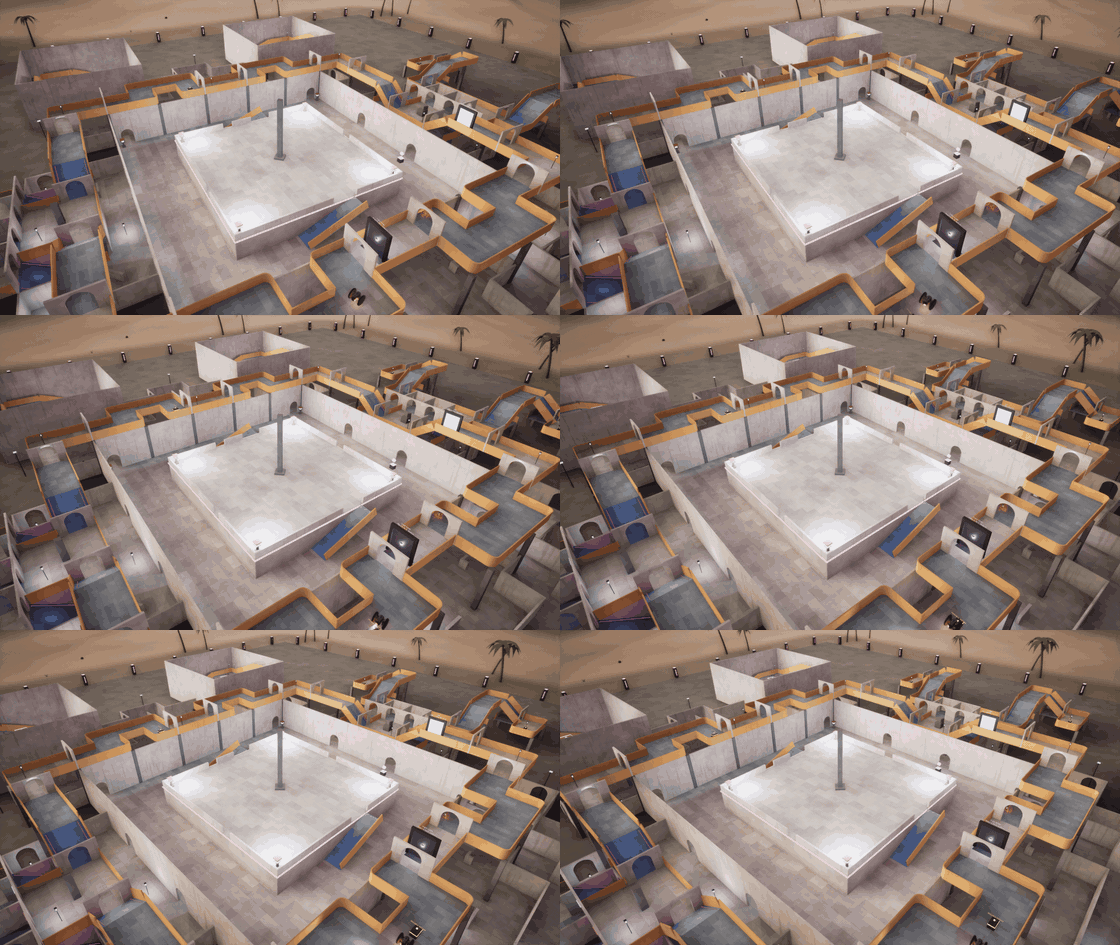
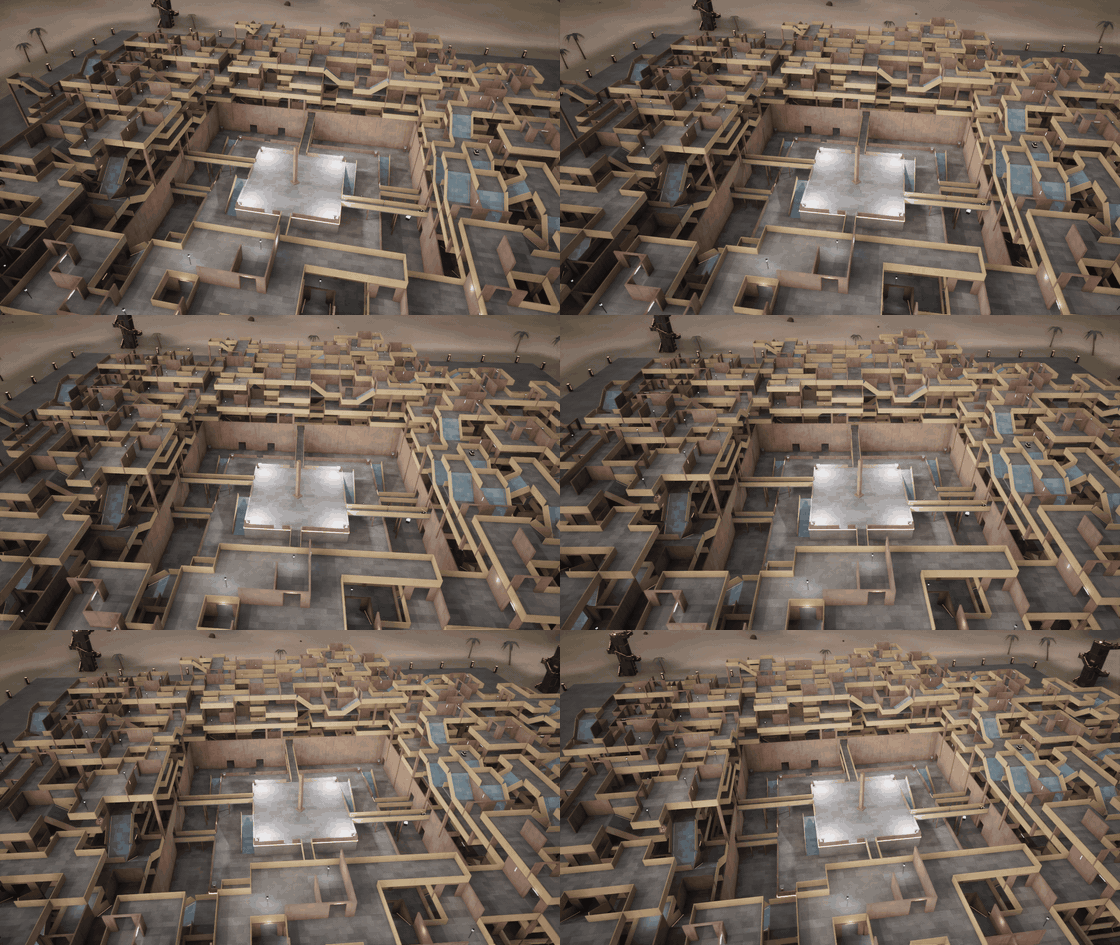
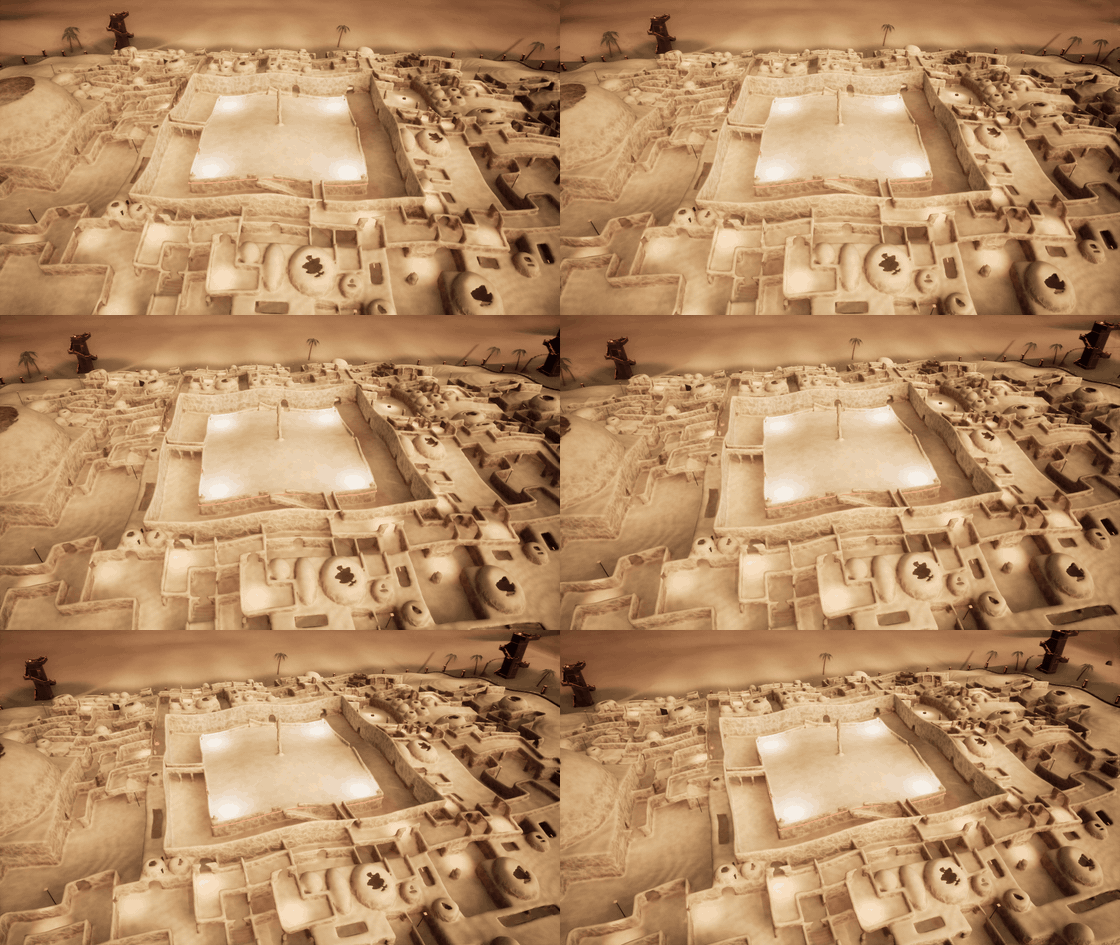
Lighting and surfaces are generated too. Light fixtures go where they make sense for the kind of room they’re in, the materials are worked out in world space with no textures at all, and the atmosphere changes six times as you go deeper.
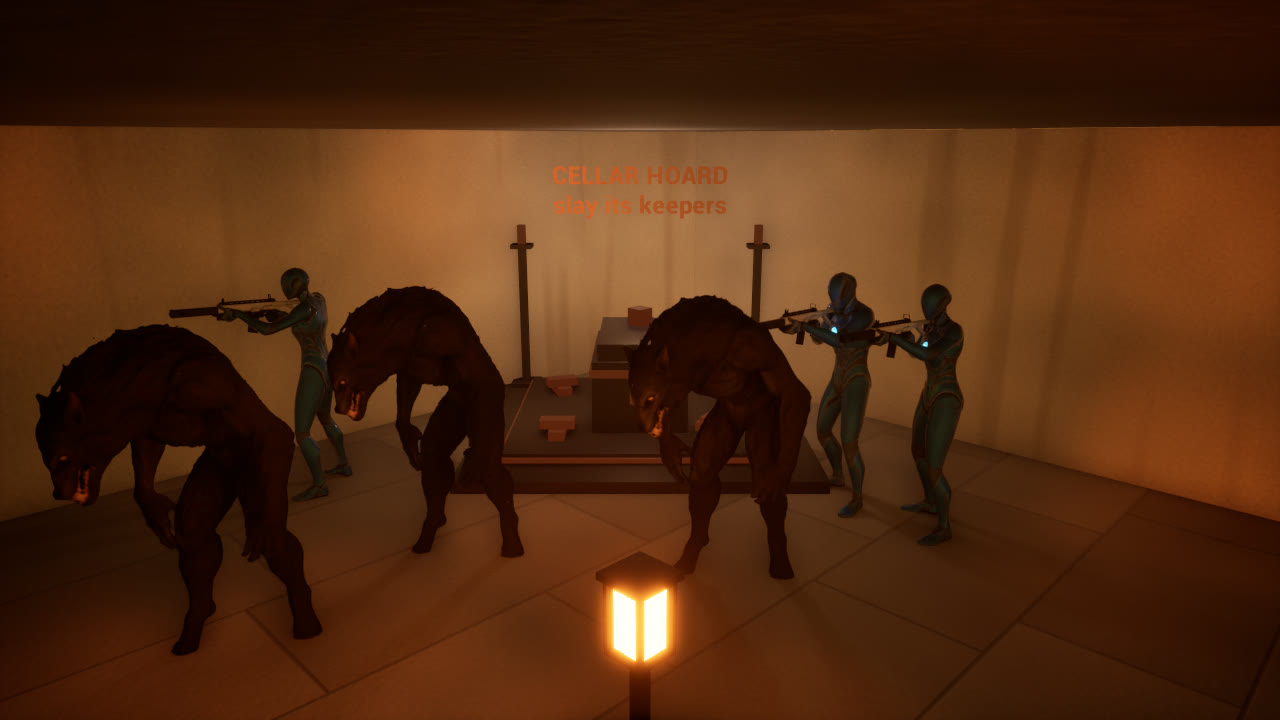
Some rooms have a door down to a cellar, which is my nod to Diablo. It’s a small maze under the level with a hoard at the far end and keepers standing around it. You fight your way down, grab the hoard and then have to climb back out and find an exit.
Guns, skills and relics
I borrowed the loadout from Witchfire: two guns, a light skill, a heavy skill and two relics, all picked at the armory. There are 15 guns built on Lyra’s weapon frames, 12 skills and 12 relics. Everything levels up to 5, with a perk at level 3 and another at 5, and schematics you find out in the levels make unlocks cheaper. You’ve got a regenerating shield on top of your health, and it plays on mouse and keyboard or a gamepad (DualSense included).
Enemies
There are close to thirty kinds now. Lyra’s own soldiers (riflemen, breachers, wardens and scouts) share the levels with werewolf packs, zombie hordes and a few locals that only show up on certain tiers, like skeletons and corpse-raising warlocks in the catacombs, or crawlers and acid spitters in the hive. The werewolves take turns coming at you, so a pack doesn’t just dogpile you all at once.
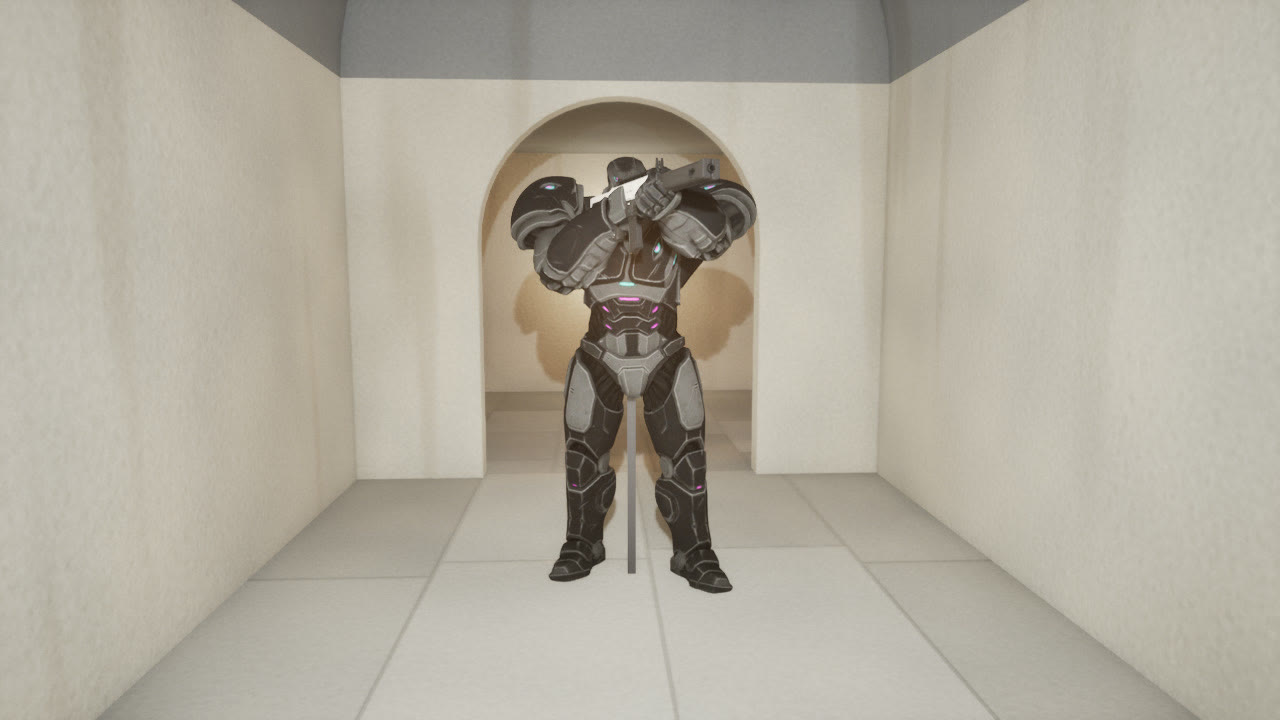
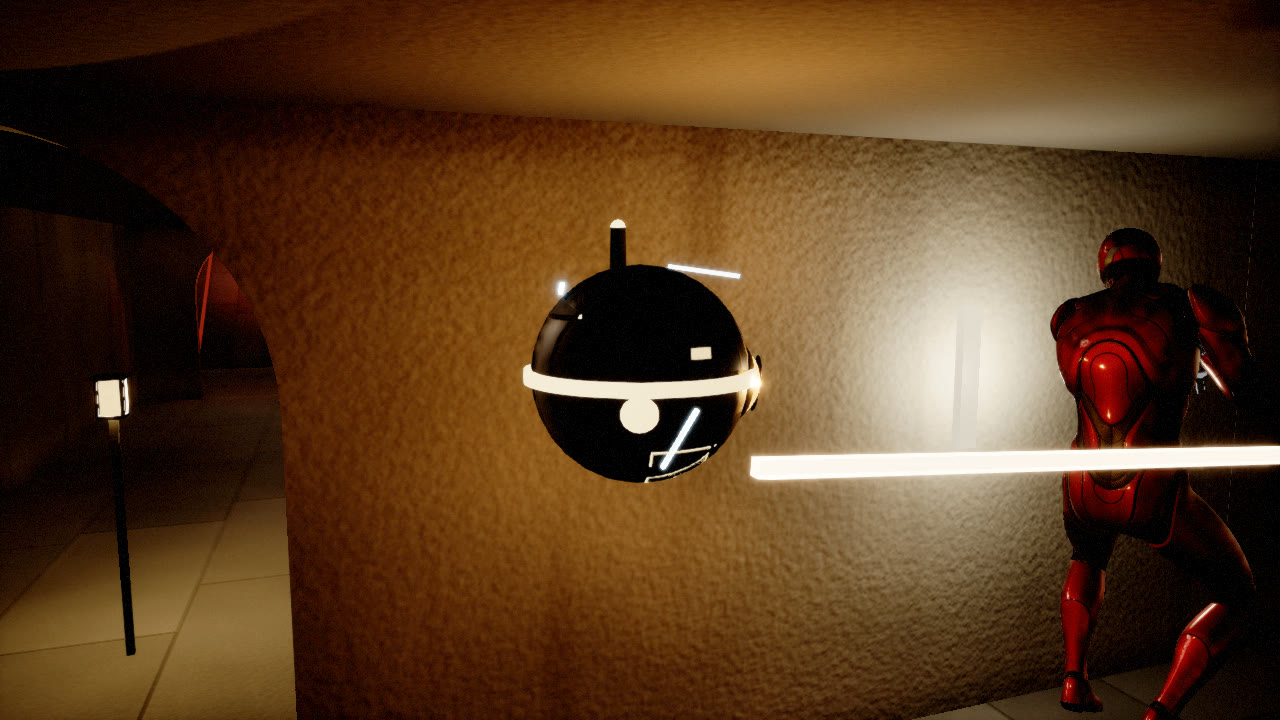
Up above the streets, sphere drones patrol and dive into buildings after you, a rolling Sweeper heals them and lets out more, and every so often the Overseer, a huge drone, turns up as an event. The boss is the Sentinel, an armoured figure about a head taller than you. It’s retargeted live onto Lyra’s animations, so it moves and aims the way a player does and swaps between a shotgun and a rifle. It throws frag charges too, and overcharges when it’s hurt.
The desert
Every level sits on an island, and every island is an oasis in a desert that just keeps going. There’s no wall at the edge, only a ward that keeps the island’s enemies in, and a few watchtowers you can climb to look out. Past that you get flatiron rocks and needles with dry washes winding between them. Further out are the deep sands, with dunes around 30 m tall and the half-buried ribs of something enormous. The terrain streams in around you on worker threads, in tiles that get coarser the further away they are, out to 14 km.
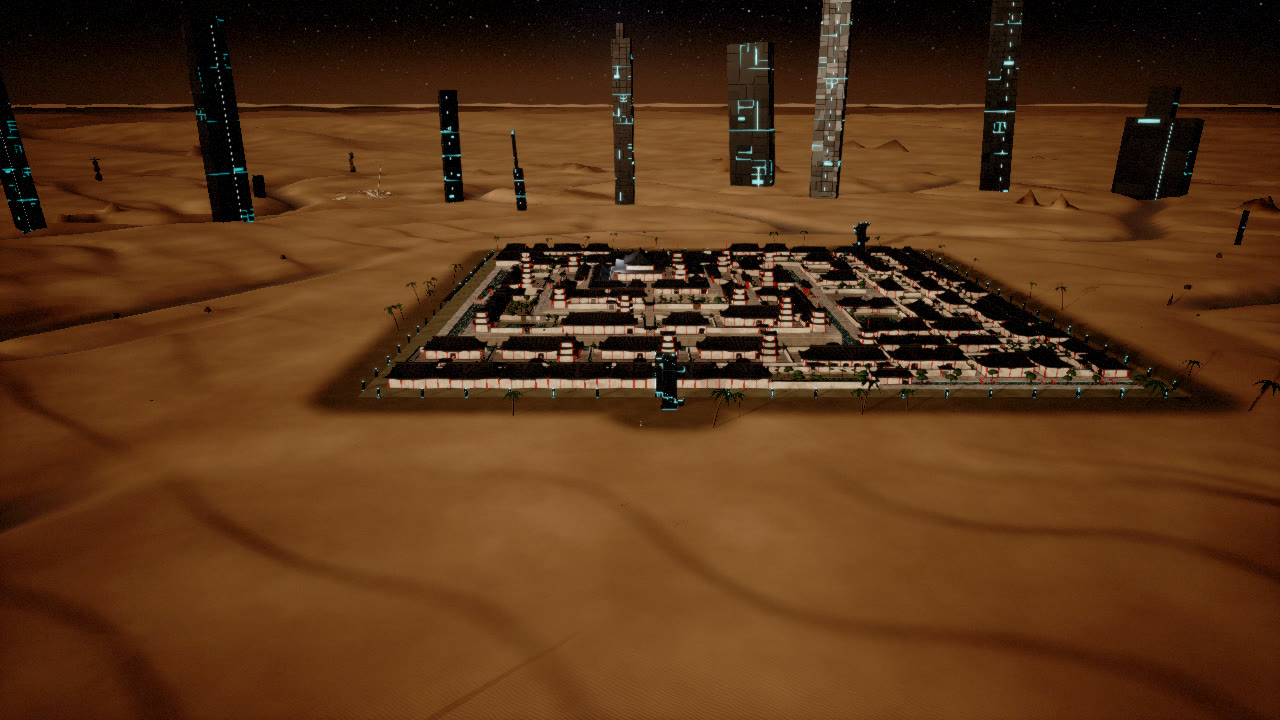
The further out you go, the more everything pays. By about 600 m it’s double, buried caches turn up more often, and worms start dropping schematics. It gets more dangerous at the same rate. Scarab swarms come up close to the island, and the worms hunt by sound. Walk or run across open sand and they’ll hear you. Stand on rock and they won’t. The game also keeps track of the furthest out you’ve been.
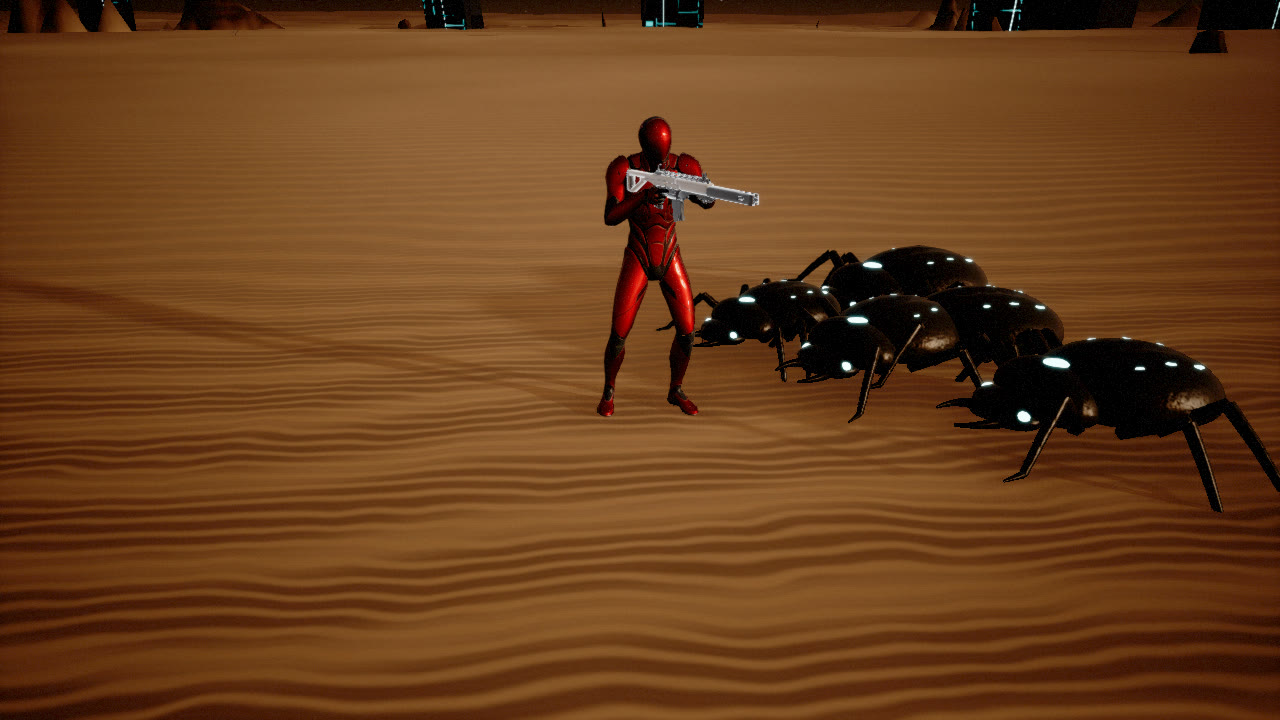
There are four kinds of worm at four depths, and each one gets bigger the further out you meet it, up to a bit more than double:
| Worm | Appears from | Length | Swallows within | Hears you from |
|---|---|---|---|---|
| Sandworm | 150 m out | 26 m | 2.6 m | 70 m |
| Great Worm | 450 m | 90 m | 6.5 m | 140 m |
| Leviathan | 900 m | 360 m | 18 m | 260 m |
| Colossus | 1.5 km | 600 m | 32 m | 400 m |
Too big for the camera
The two biggest worms broke the camera. Lyra’s third-person camera sits a few metres behind you, and when something 360 m long comes up right next to you, it ends up staring at a wall of worm or clipping straight through it. So the Leviathan and the Colossus now take the camera over for a few seconds, with letterbox bars, and hand it back when it’s over.
A Leviathan comes up from underneath you. As the sand starts churning, the camera pulls up and back until you’re a dot in the middle of a ring of boiling sand, and then the mouth comes up out of it straight at the lens. If you braced, it spits you out and the camera cuts to follow you through the air. If you didn’t, you get a wide shot of it towering over the spot where you were standing. And if you manage to get clear before it comes up, it bends its arc and comes down on you instead, which gets the same close-up as the Colossus below.
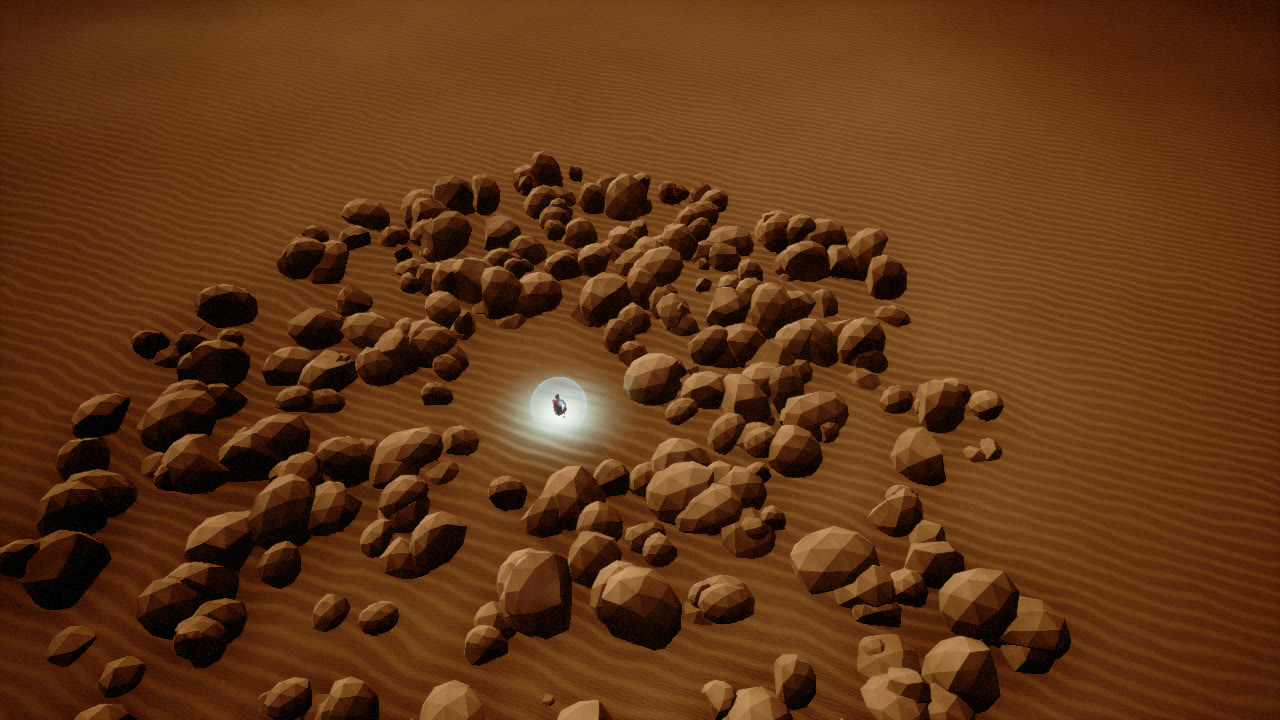
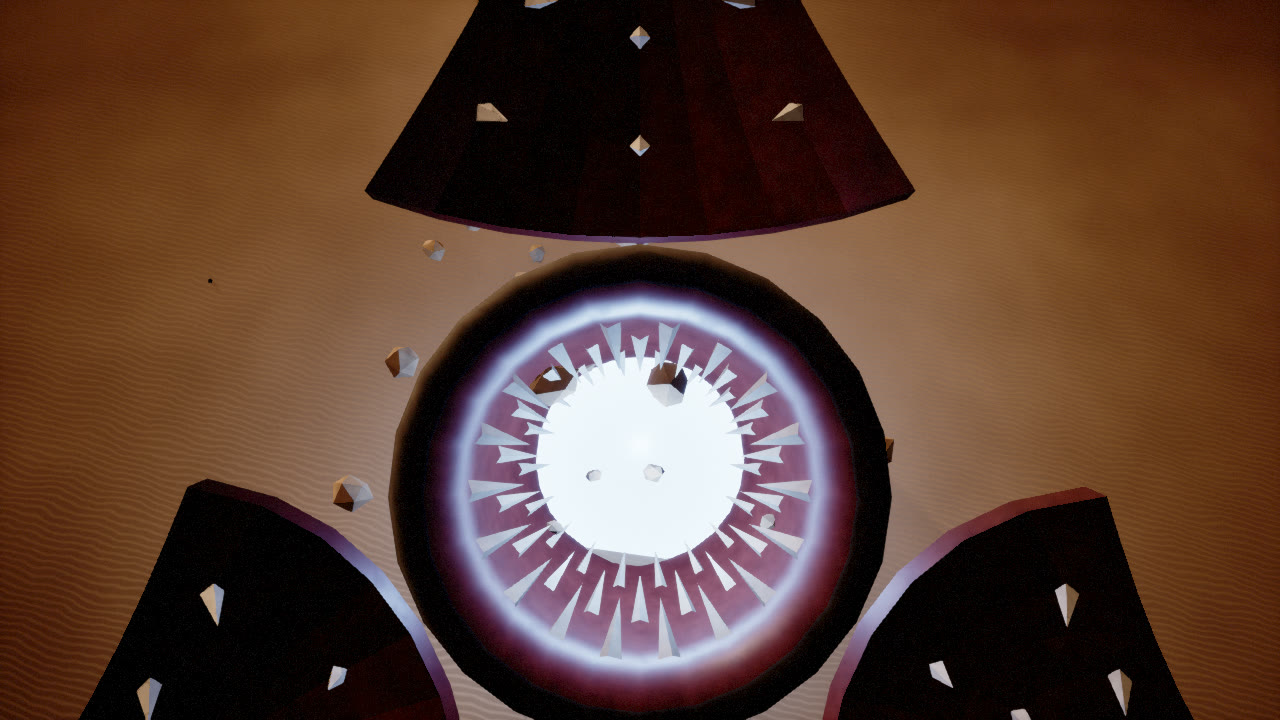
The vertical slice: the Wordless Road
The slice came out of one design problem. With the smaller worms, the answer was always to run. So I made the last one too big to run from. Once the sand starts churning under you, the spot where the Colossus is going to come down follows you faster than you can move, and if it swallows you, you’re dead. That meant players needed something else to do, and the rest of the slice grew out of that.
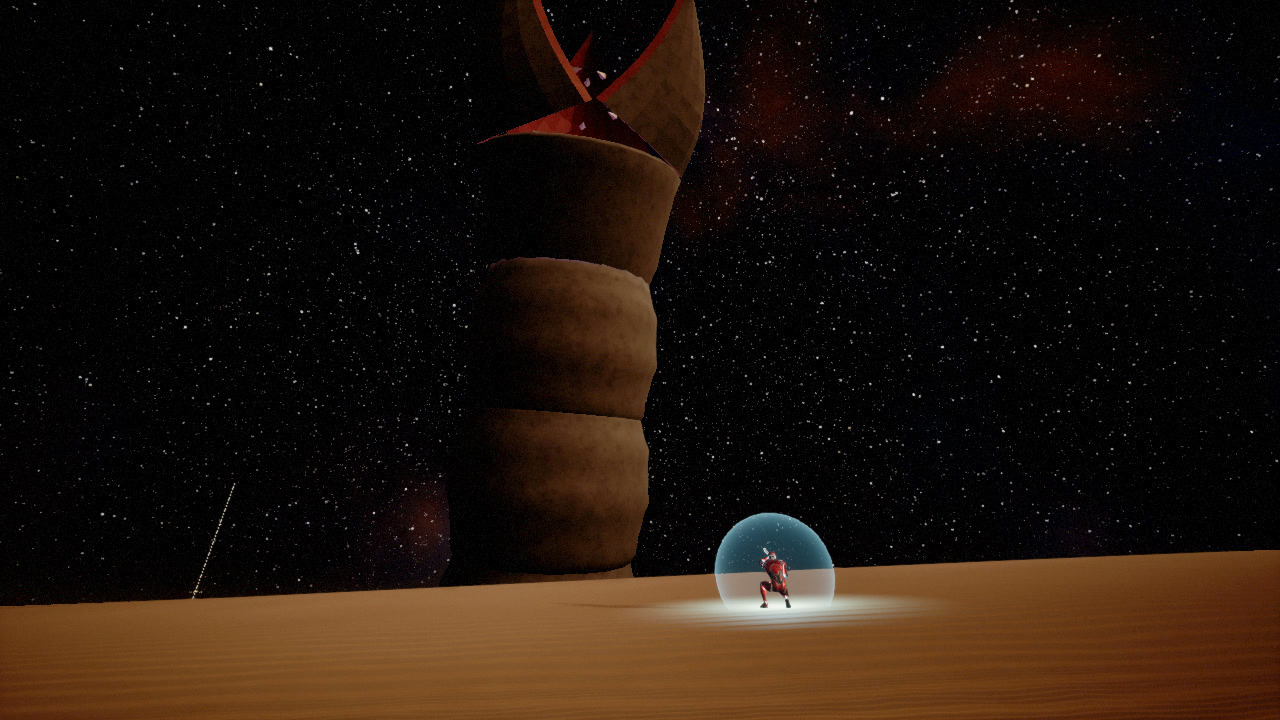
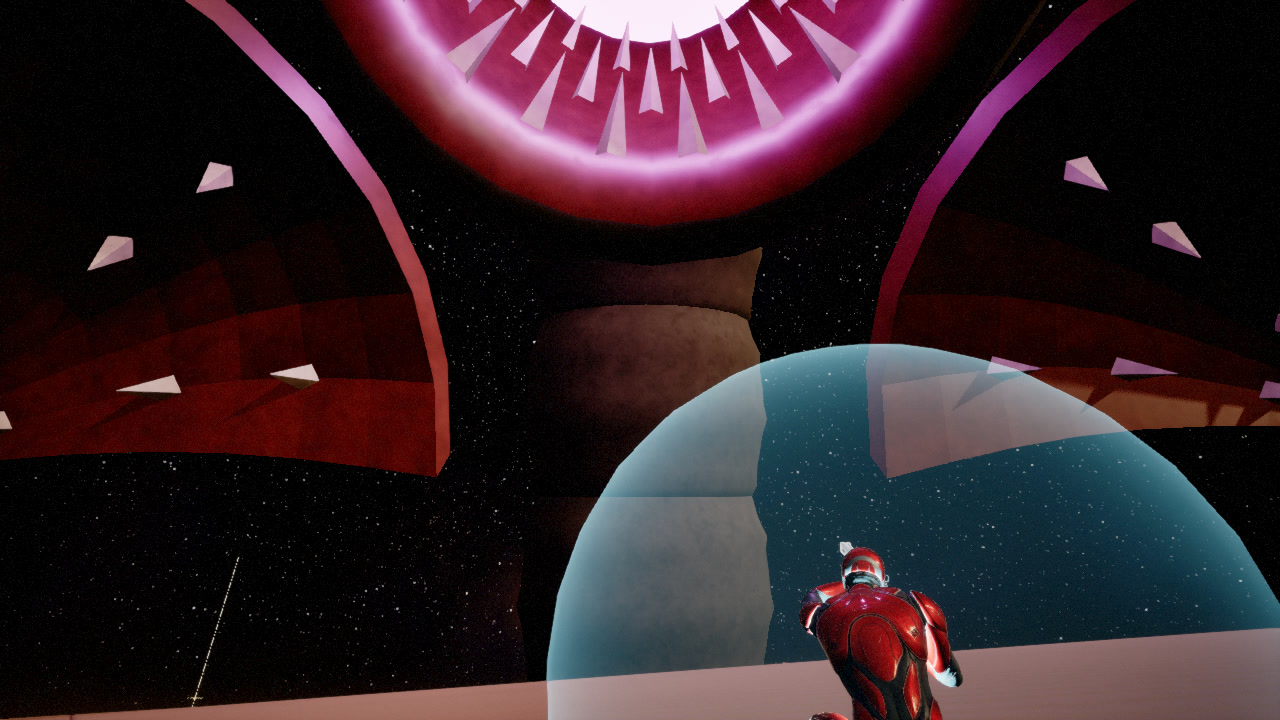
The slice adds three new abilities. I wanted each one to cost you something and to tie into how the worms hear, so they change how you move around the desert:
- Brace. Hold crouch and your shield turns into a bubble that takes half of every hit. While you hold it, it drains your shield and locks out your skills (a quick tap still just crouches). If a worm comes up under you while you’re braced, it spits you out instead of swallowing you.
- The Updraft Harness. A jetpack, heavily inspired by Star Wars: Bounty Hunter, and it only works in the desert. You get about four and a half seconds of thrust plus a forward boost, up to 33 m high. Thrusting low over the sand is as loud as running, so the worms can hear it.
- Homeward. Basically a town portal, and like the jetpack it only works out in the desert. Hold a key and a door rises out of the ground over six seconds, then takes you home with everything you’re carrying. Getting hit interrupts it, and you only get one per expedition, so you have to pick your moment.
You learn them through a quest that has no words in it at all. I took that idea from Moebius’s Arzach: no dialogue, no quest log, no objective text. About 300 m out there’s a fallen rider, and digging it up gets you the harness. Three stones sit on top of 24 m spires that only the harness can reach. Wake them up and their beams point to where a bell rises out of the sand. Ring the bell and the Sleeper comes for you, which is a Colossus. If you brace, it spits you onto a 60 m monolith that’s too tall to jetpack up. On top there’s a door standing on its own, and walking through it teaches you Homeward and takes you home. So the thing you’ve been running from the whole time ends up being your way up.
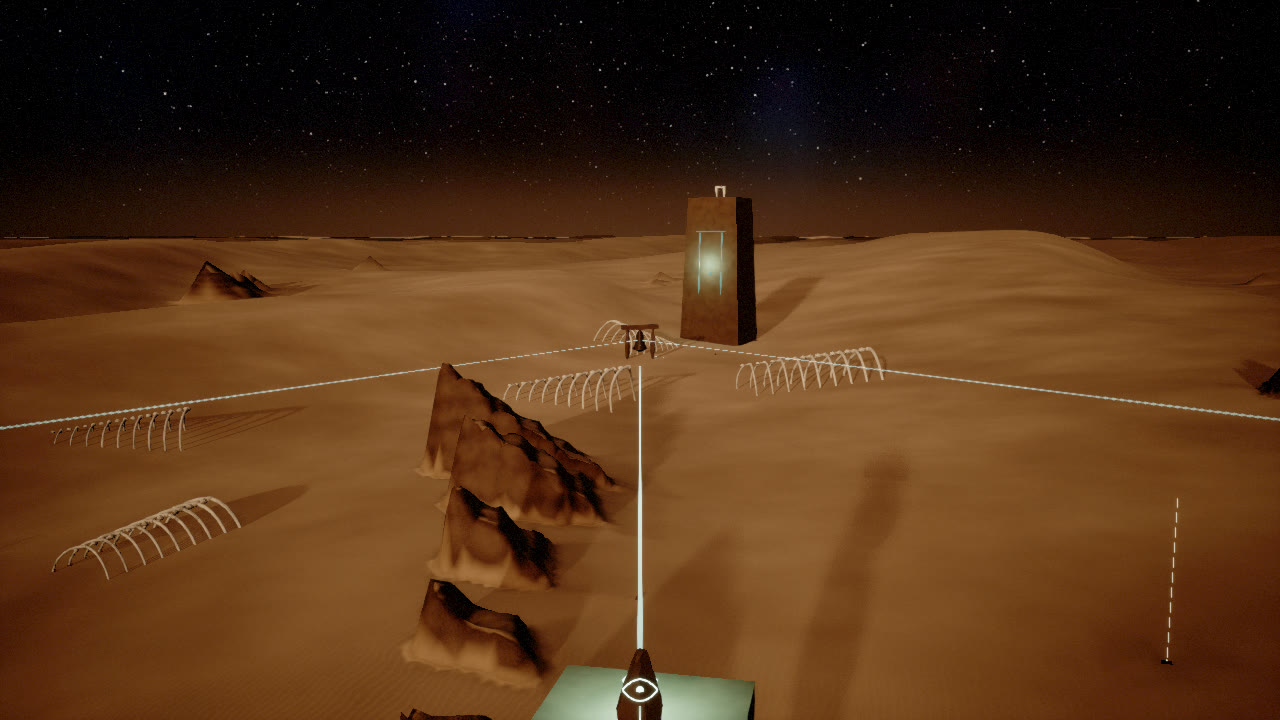
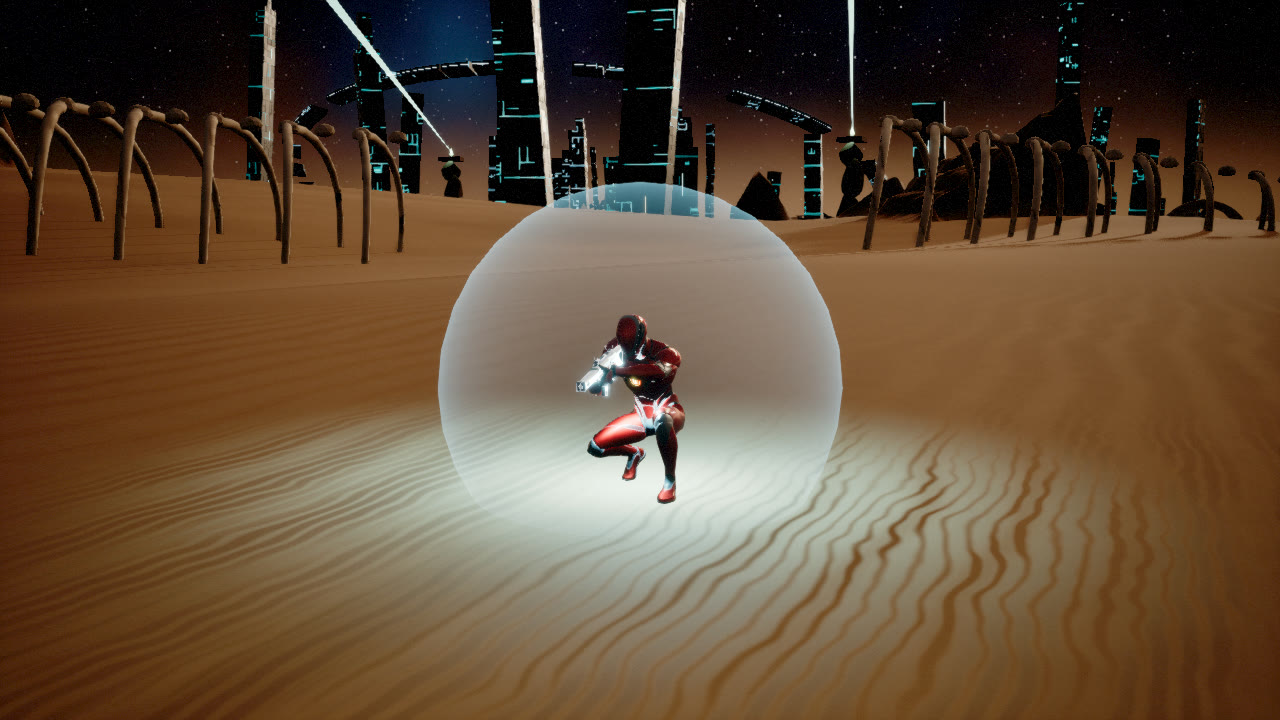
The only text in the slice is the control hint when you pick up a new ability. Everything else is glyphs. A strip of them along the top of the screen stands in for a quest log, and the glyph for your next goal floats over wherever it is in the world.
Some technical bits
- The generator and the run logic live in one plugin that doesn’t know Lyra exists and has its own tests. A second plugin hooks it all into Lyra’s characters, weapons, Gameplay Ability System and HUD.
- Enemies, worms, weapons, skills and relics are all specs in tables. One asset, the art set, lists every placeholder mesh, material, sound and music slot, so swapping in real art later is a matter of changing entries.
- The worms only know about one thing: noise. Footsteps, jet thrust, landings, digging and the Homeward door are all just sounds to them, which is why the jetpack and Homeward worked with the worms straight away without any new AI.
- Collision cooks in the background while the loading screen keeps moving, and an editor-only copy of the level mesh gets skipped in play. That took the slowest tier’s load from about 53 seconds down to 21.
Tests
I lean on automated tests a lot. There are 82 of them: 54 for the generator and run logic, and 28 that run inside Lyra. They check that every tier generates levels you can actually walk through, that a full run plays out, and that the weapons, drones, bosses, desert creatures and controls all work. A packaged build can run a smoke test of the whole game on its own, and none of the tests ever touch the real save file.
The vertical slice has a test that plays it the way a player would. On a fixed seed and a fresh save it digs up the harness, flies to each spire, rings the bell, braces through the Sleeper, rides the spit and walks through the door, checking the game’s state at every step. Most of the desert screenshots in this post came out of tests like that. The worm cameras have their own tests too, which fail if the camera ever ends up under the sand or inside a worm.
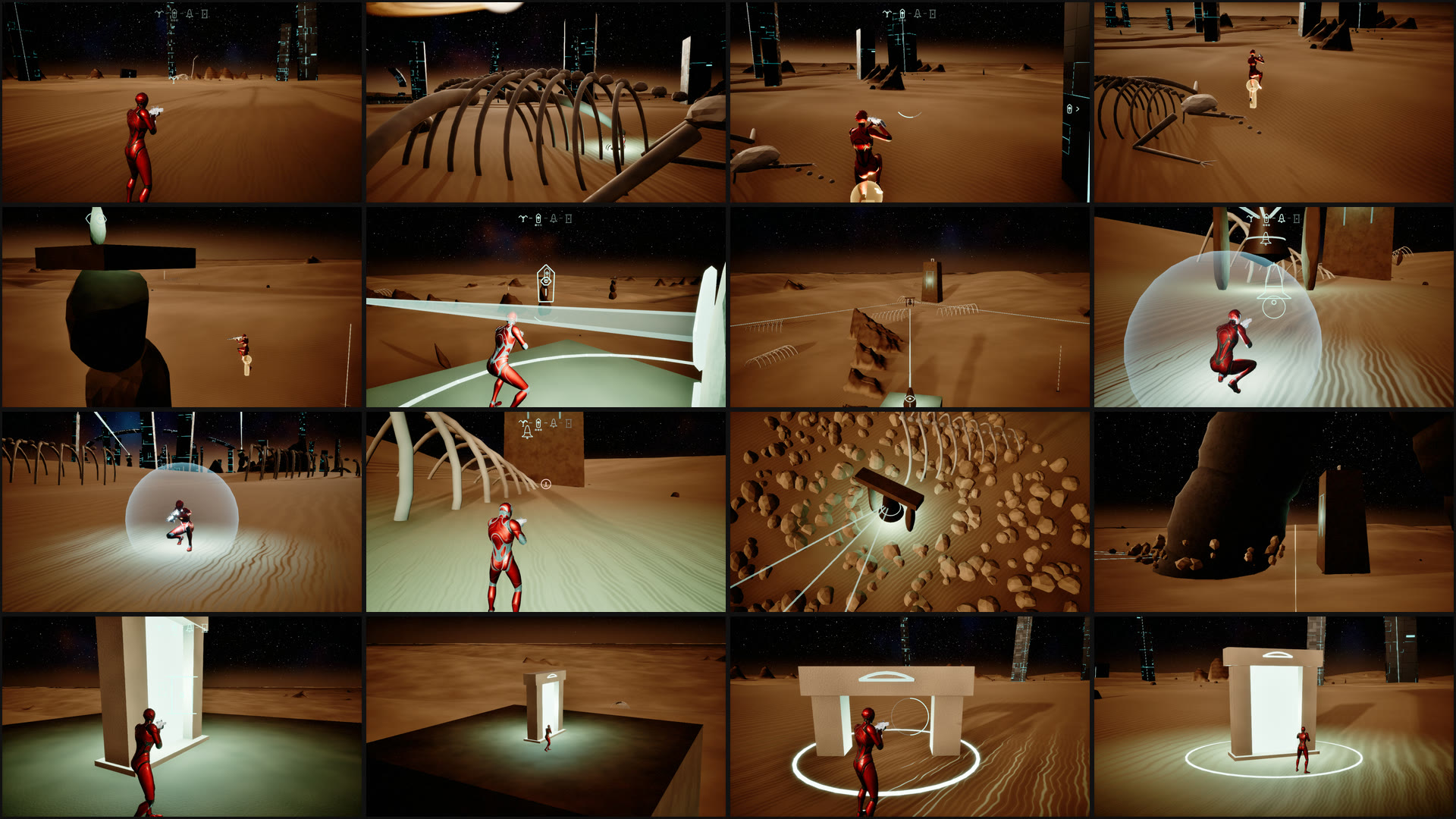
That playthrough test found bugs I’d otherwise have hit much later. The 12 m dunes were burying the quest markers, the worm’s own body was stopping the spit in mid-air, and the brace bubble vanished a moment after it appeared because a shared effect destroyed itself once it finished growing.
What’s next
Most of the art is still placeholder, and the slice’s numbers are a first pass that need proper playtesting. Next up are tuning, a skill tree, real art through the art set, a soundtrack, and a packaged build people can play.
How I built it
Unreal Engine 5.8 and Lyra, with Claude Code as my coding partner for the C++, the tests and the capture scripts. I set the direction and made the design calls, from the references for each tier and the extraction loop down to the slice’s rules: hold to brace, a Colossus kills you if it swallows you unbraced, one Homeward per expedition, and no words in the quest.
//CreatureShock
April 9, 2025
WIP
Here is a UEFN project I am working on based on the game System Shock. Currently in the “vertical slice” phase, trying to establish the game loop. One interesting challenge has been exploring how to use the new stat devices for an RPG style rogue lite. So far the challenge has been the fact that the stat devices do not allow you to “zero” out the levels, which doesn’t lend itself very well to character stat creation. With this in mind, I am having to scrap the stat devices and go completely custom verse code. Very challenging indeed.


//BreakBust
February 27, 2025
I have embarked on a Unity project. Maybe the last one depending on the fate of one of my favorite software. It’s a concept I have always wanted to attempt and I think it’s simple enough yet fun. below are a series of gifs that show the progress. This concept started with a sketch I can’t find anymore, but its mostly inspired by Bust-a-Move meets breakout. And maybe some angry birds thrown in the mix.
I have been using Grok, and its allowed me to get this far in about 4 days. It has not gone totally smoothly but from what I can tell this concept is refining nicely.
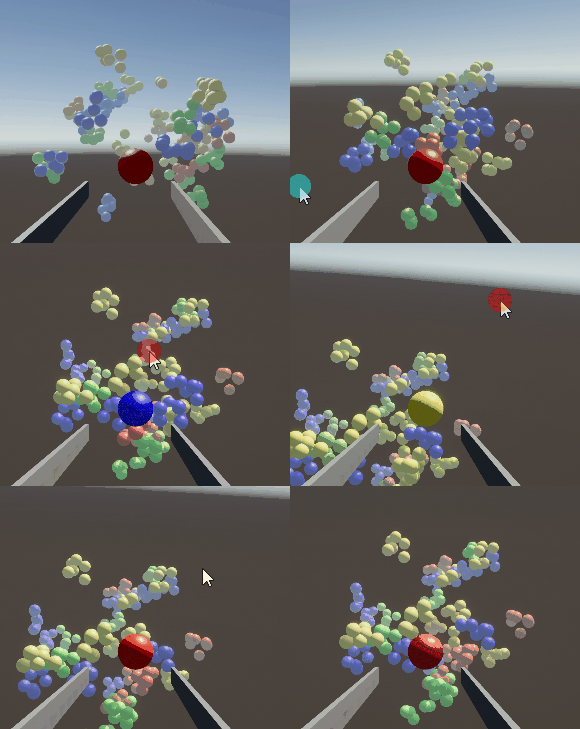
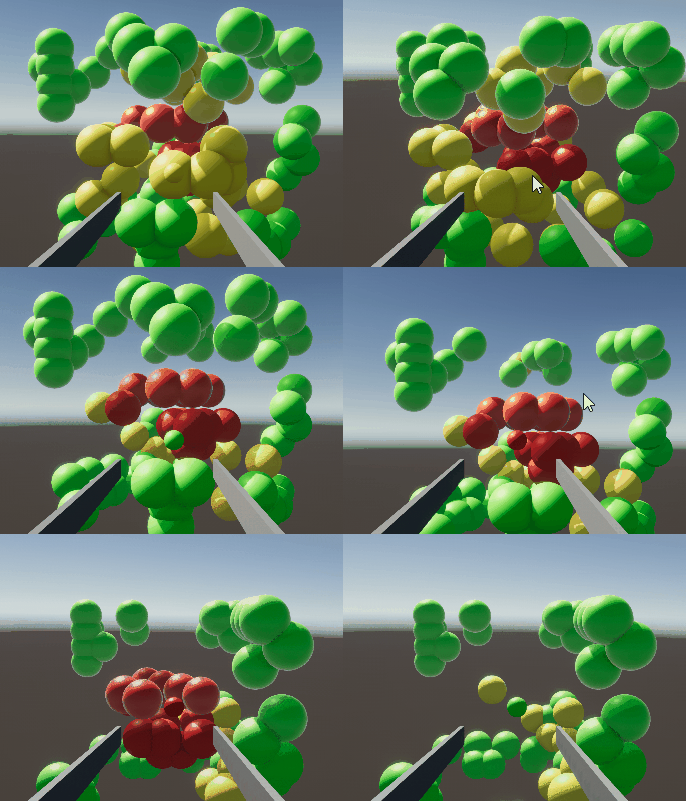
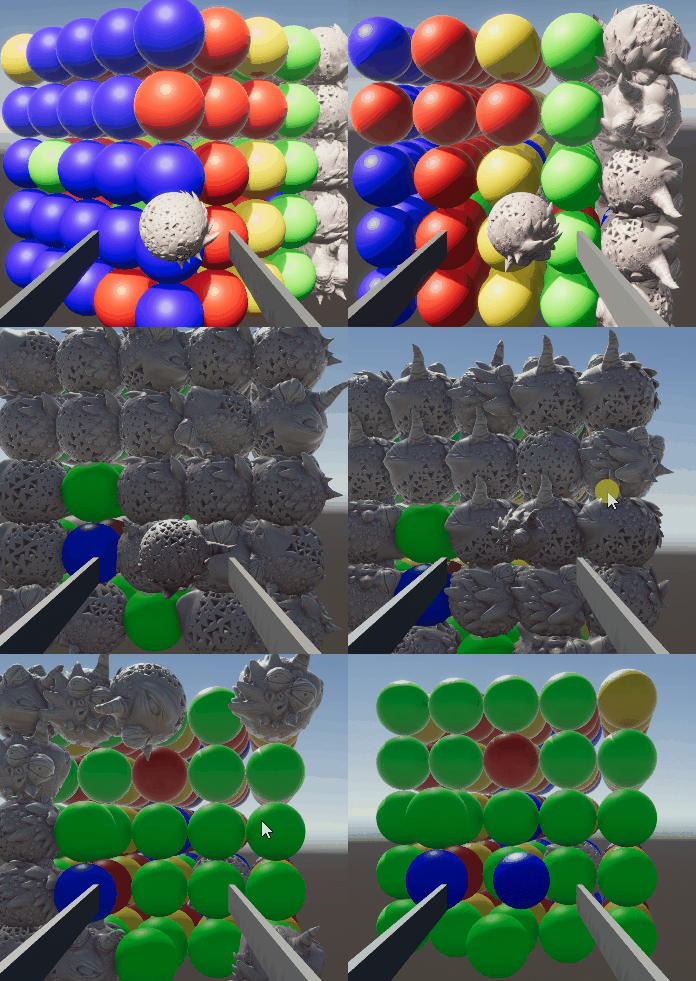
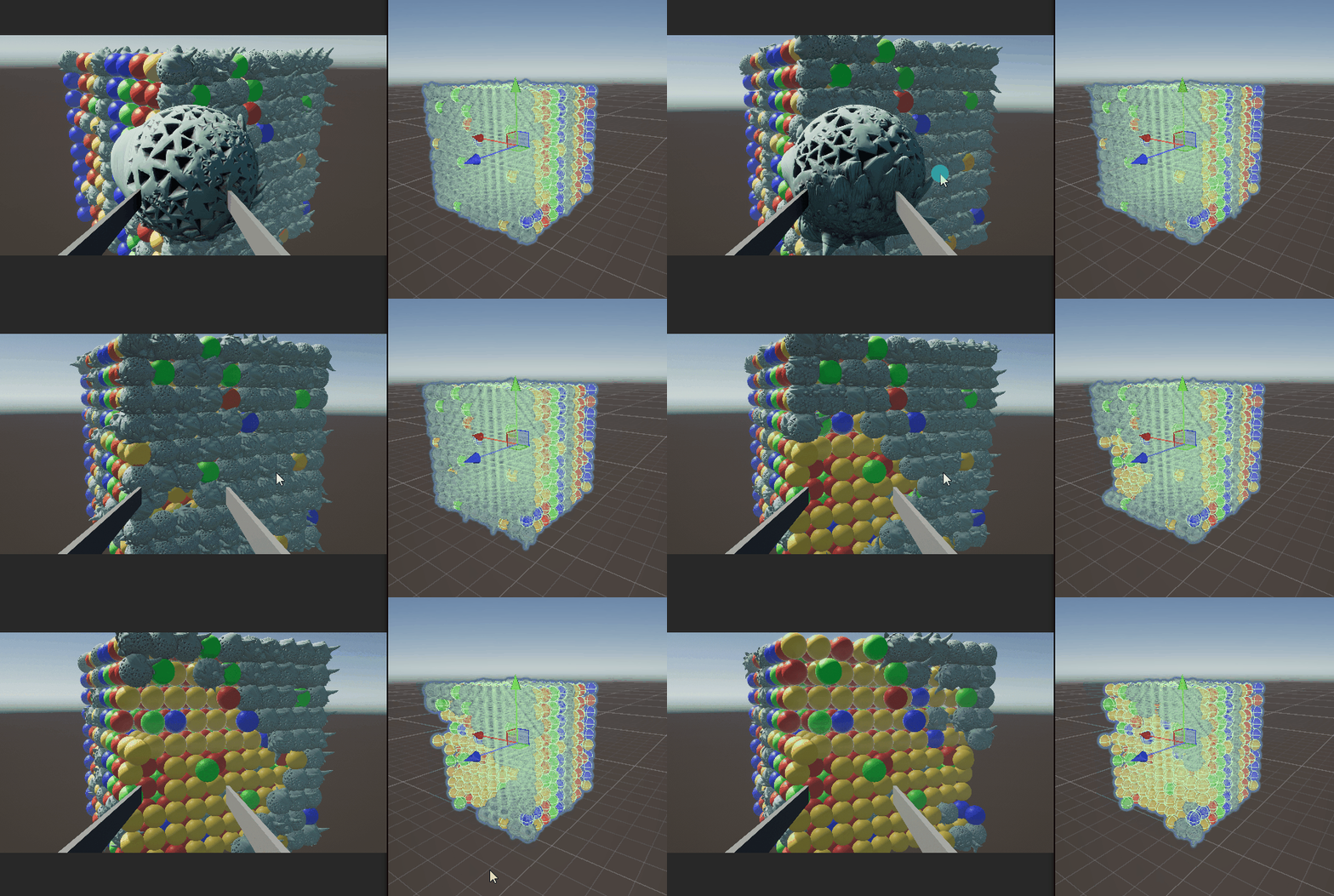
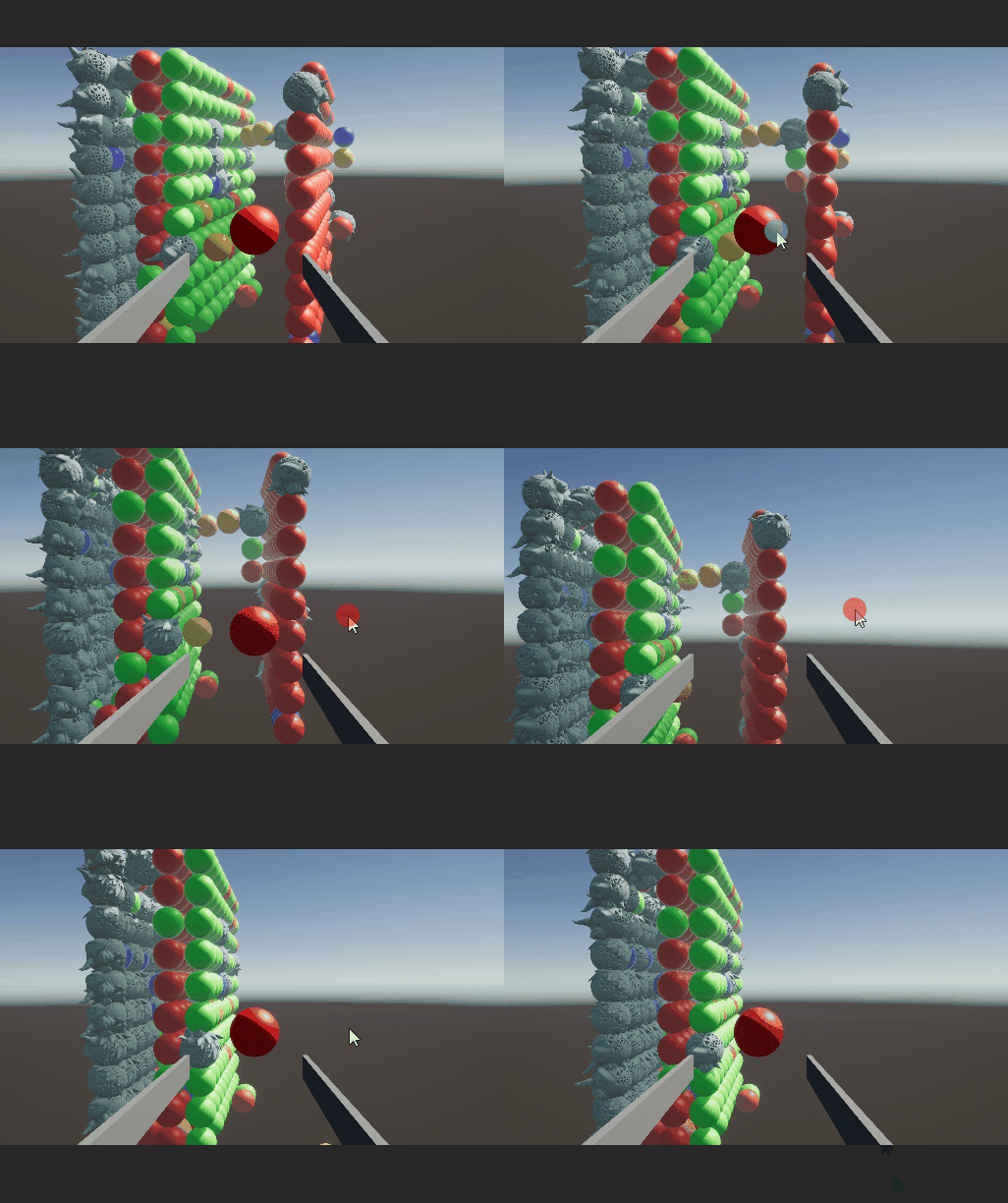
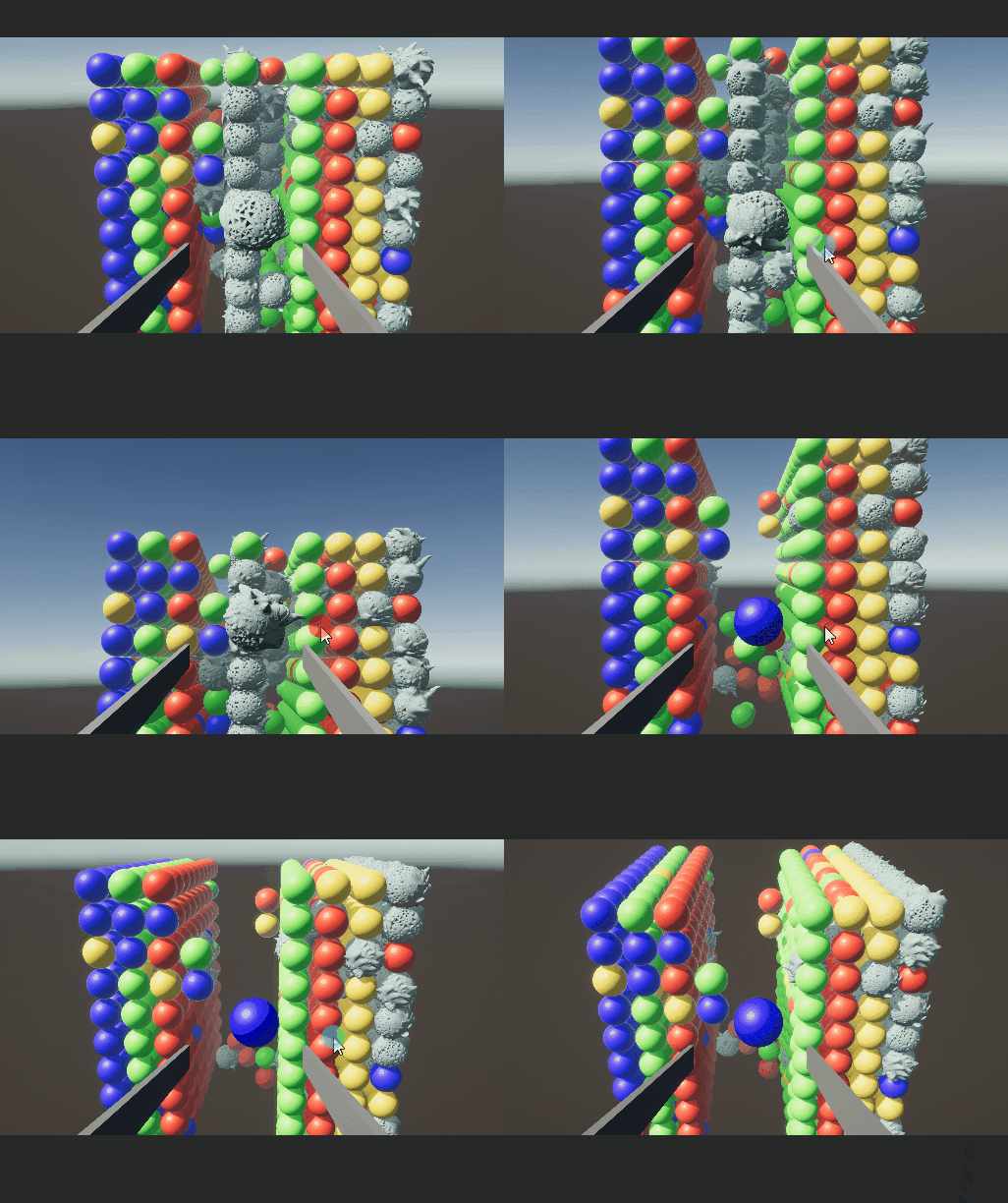

quick zbursh ball placeholder
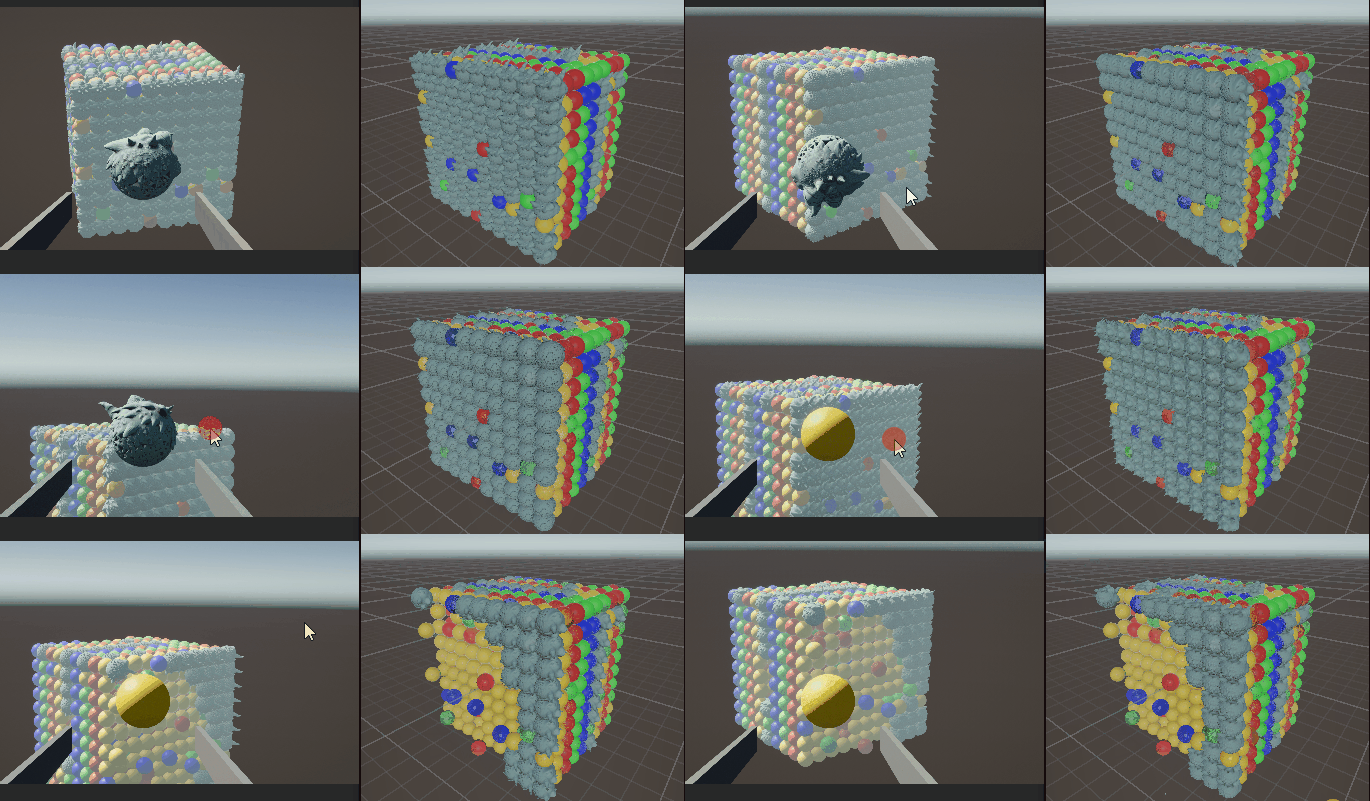
Added a chain reaction visualization for the editor, changed the method of chain reacting to a more performant method.
//RevitPrint
March 18, 2020
With the help of Houdni, I was able to reduce a dense architectural Revit model to manageable and precise slices for modular printing. After a good 40+ hours of printing on a $130 Crealty Ender 3, I was able to glue the sections together and form a 17″ tall PETG print. One of my biggest and most cost effective efforts yet.
It’s completely hollow for lighting capabilities


//AreYouNot…
April 8, 2017
Here is a Maya animation test bringing Alembic into UE4.
The environment model is from 3dwarehouse.sketchup.com/
Music : Panda Eyes -Weed N Fries
//NacciFibo
January 5, 2017
Some Arnold and Maya
//Mashup
December 15, 2016
Maya has killed C4D. There is little reason to use cinema 4d now that 2017 has included the Arnold renderer and the new motion graphics tools.
//BelatedHalloween
November 1, 2016
I spent about a day on this. Photogrammed my face, then boolean’d a rough form. The printing took the longest so I had to cut corners. The Upper mask had too little infill and de-laminated. I was able to snap a crappy selfie before it disintegrated entirely. The fit was pretty close! Happy Halloween!


//Bands
June 22, 2016
Some substance patterning. After making horizontally tiling alphas, I detailed and modeled the rest in zbrush, then rendered in vray. Next I printed them out to custom fit my hand. I have a few coming in from shapeways in silver. https://www.etsy.com/shop/Haasco?ref=l2-shopheader-name Available on Etsy.


//TaoBot
November 19, 2015
The struggle is real. This sketch represents the force required to keep polar opposites connected as they are constantly rejecting one another. This concept is pervasive throughout humanity.
I’ve started this in Zbrush and plan on finalizing in Blender.

**Work in progress, adding detail, remeshing, etc. I’m making heavy use of the zmodeler brush.

***Update
The UE4 arms are very handy, thanks Epic!

***Update 6/11
Incorporated the Bagua, added some color
It’s tricky to assign unique colors for wind, water, and lake but maybe I need to dig deeper into the translation


This gallery contains 6 photos.
All of these prints were modeled in Zbrush, printed with PETG

Here are some Halloween masks printed in Ninjaflex rubber filament. I modeled them based on rough scans of my face, then wore them around the neighborhood with my son.

I painted the ninjaflex Arrow mask with some krylon black and green spray.

Plastic PETG prints

Here is my first pass at using metal filaments and cold casting. The tan prints are using bronze infused PLA. I will post another update after I polish the bronze. The smaller prints are cold casts from plastic prints. I mixed bronze powder and resin, then poured the mix into a latex mold.


Here I have printed a large 8″ PETG white print. It’s shape allowed it to be printed completely hollow! Makes a nice lantern 😀
//C4dShaderTest
October 20, 2015
Completely procedural using vertex masking, There is only one bump map driven by alpha channels, no normal maps or diffuse maps. I think I’m going to be using cinema 4d for a while.

//37thAnnualMFA Blaffer UH
April 10, 2015
Here it is! The show went really well! Hopefully the first of many virtual reality projects. Take a look at the images below, and hit the play arrows to get a Web browser view of a couple of the HMDs (Hanging Mounted Displays) that were in the gallery.
Most of the hardware was 3d printed, and the electronics included only 5 Samsung S3 android devices. The software used to generate the imagery was Zbrush4r7 Blender, Dive for Unity, and VR player for android. Audio generated in Ableton live and Audacity, mastered in Unity 5.
Much thanks to Evan Lee for joining me on this endeavor.
More examples to follow in later posts, including behind the scenes and VR player examples.


